

By Shannil Varma, Manager – Climate Leaders Coalition
Last week, I attended the Carbon and Energy Professionals (CEP) Conference, joining energy and carbon leaders from across Aotearoa New Zealand to discuss the challenges and opportunities shaping our transition to a low-emissions, resilient economy.
The programme covered a wide range of topics, from energy security and infrastructure planning through to practical decarbonisation initiatives and governance. While there was a lot to take in, four key themes stood out for me which I think would also be highly relevant to Climate Leaders Coalition (CLC) signatories and Sustainable Business Council (SBC) members, as they consider how to remain resilient and competitive in a changing environment.
Climate leadership starts in the boardroom
One of the comments that stayed with me came from Aisha Punga, Chief Executive Officer at Toitū Envirocare, who spoke about the importance of embedding climate considerations into governance, strategy and decision-making.
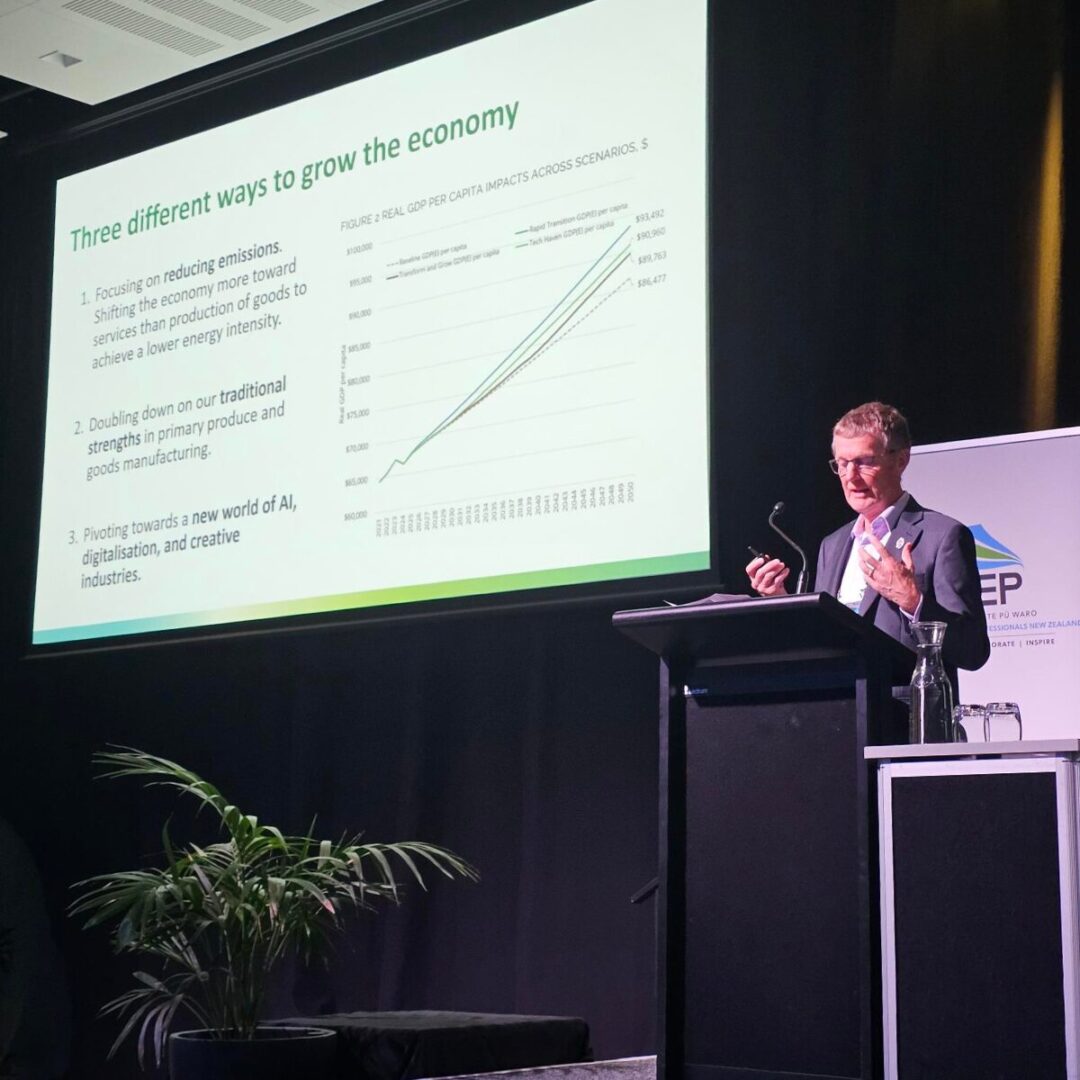
It was encouraging to hear Aisha reference SBC & CLC’s recently released Driving Sustainable Growth: Opportunities for New Zealand’s Economy report, which outlines a pathway that could increase Aotearoa New Zealand’s GDP by $22 billion per year by 2035 and $33 billion per year by 2050 – while simultaneously reducing national emissions by an additional 6% per year by 2035 and 22% by 2050. Aisha reinforced the report’s insight that climate action and economic prosperity are not competing priorities and that, when approached strategically, they can support and strengthen each other.
Aisha challenged organisations to move beyond treating sustainability as a standalone function. Instead, she spoke about the importance of engaging every part of the business, identifying opportunities, translating climate and nature-related insights into commercial outcomes, and maintaining momentum through strong governance and leadership.
One comment that particularly resonated with me was: “If your board is not considering its climate transition strategy, then it is absolutely missing a significant trick.”
What stood out to me was not just the emphasis on board oversight, but the broader challenge posed to carbon and energy professionals. Aisha spoke about the importance of translating climate and nature considerations into the language of governance, risk, resilience and value creation. In this view, organisations that continue to treat sustainability as a separate function risk limiting both their impact and the long-term value they create.
Decarbonisation is driven by operational excellence
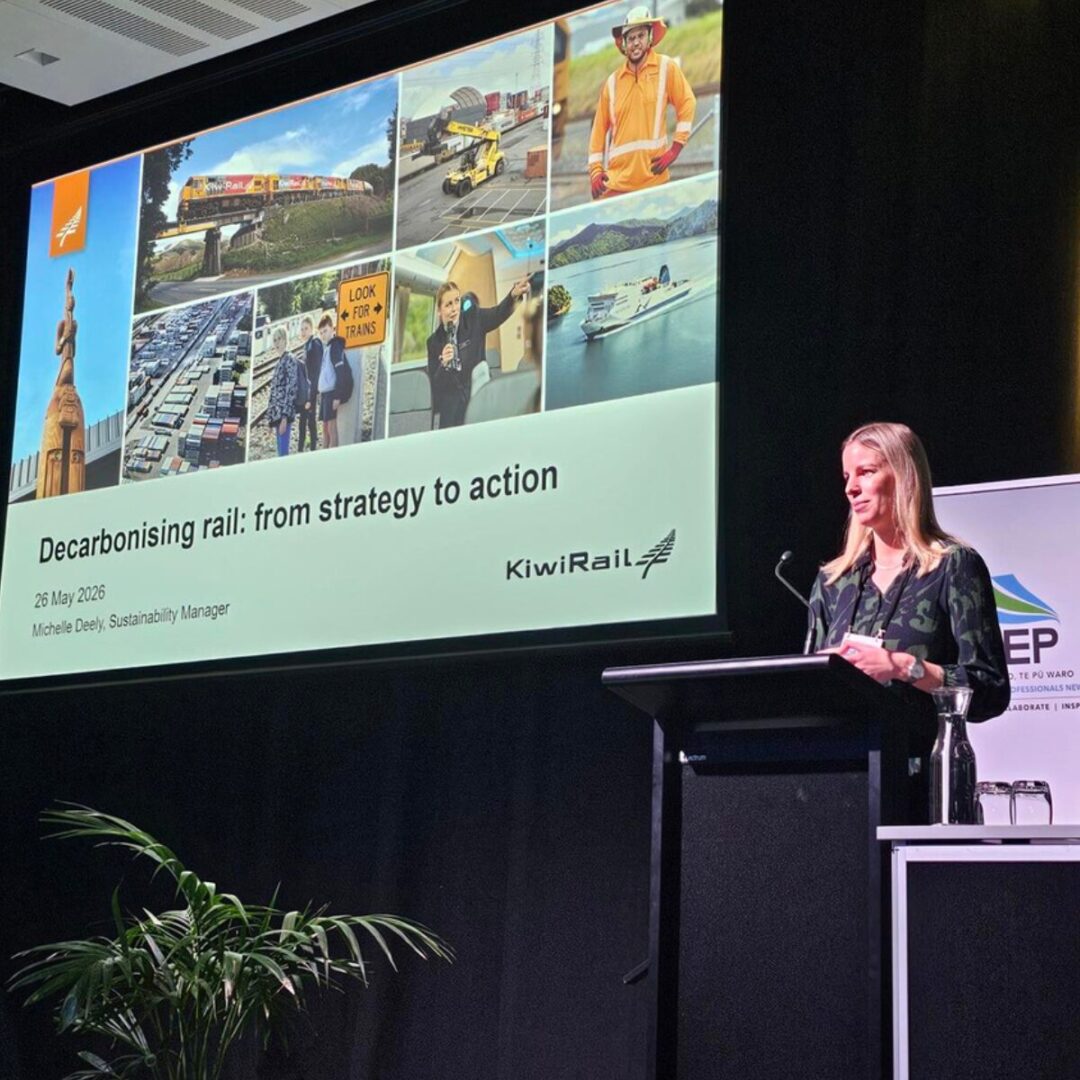
Another theme highlighted by one of our network was the importance of execution.
Michelle Deely, Sustainability Manager at KiwiRail, shared practical examples of how the organisation is reducing emissions across its operations. An important insight was that emissions reductions do not always come from major technology investments or breakthrough innovations. Often, they come from improving the way existing systems operate.
An example was KiwiRail’s use of driver assistance systems that help locomotive engineers optimise braking and acceleration, improving fuel efficiency through everyday operational decisions. Other examples included remote switching technology that reduces unnecessary engine use, ferry timetable optimisation to improve fuel efficiency, and the use of lower-carbon materials in capital projects.
Michelle Deely, Sustainability Manager at KiwiRail, shared practical examples of how the organisation is reducing emissions across its operations. An important insight was that emissions reductions do not always come from major technology investments or breakthrough innovations. Often, they come from improving the way existing systems operate.
I walked away reflecting on the insight that decarbonisation is not a single project, but a result of thousands of decisions made across an organisation every day.
The energy transition is increasingly about resilience
Another key takeaway was the relationship between climate action, energy security and business resilience – particularly relevant given the current geopolitical environment.
Marcos Pelenur, Chief Executive at EECA, spoke about some of the significant energy challenges facing Aotearoa New Zealand, including dry-year electricity risks, declining gas reserves and ongoing pressure on liquid fuel supply.
Marcos discussed opportunities in electrification, bioenergy, biogas, solar generation, and improved energy efficiency, emphasising efficiency as a strategic advantage. In a period of energy uncertainty and rising costs, reducing energy demand can deliver immediate benefits while also supporting longer-term emissions-reduction goals.
The energy transition is no longer solely an environmental issue but also a resilience and competitiveness issue. Businesses that improve efficiency, diversify energy sources and invest in cleaner technologies are likely to be better positioned to navigate future challenges, while maintaining productivity and growth.
Collaboration and long-term planning are critical
There were several sessions that highlighted the importance of collaboration and forward planning in supporting national transitions.
John Clarke, Executive General Manager Future Grid at Transpower, spoke about the need for proactive electricity network planning and the importance of identifying and securing space for future infrastructure. John mentioned the long lead times for major infrastructure projects and the need to act early to meet future national energy demands.
Throughout the conference, many speakers highlighted that no single organisation can deliver the transition alone. Businesses, infrastructure providers, government agencies and industry groups all have a role to play in building a resilient, low-emissions future.
As many organisations continue to electrify and explore alternative fuels/emerging technologies, collaboration will become increasingly important to ensure that the supporting systems, networks and infrastructure are in place when needed. This is one of the reasons why CLC is particularly focused on collaboration, which is a cornerstone of its most recent Statement of Ambition.
Final thoughts
Across the sessions, there was a strong focus on practical action and leadership. Whether the discussion was about energy security, electrification, alternative fuels, infrastructure planning, or climate strategy, the underlying message was remarkably consistent: organisations need to think ahead.
A thought I keep reflecting on is Aisha’s argument that sustainability cannot sit on the sidelines of business. The organisations making the greatest progress were those embedding climate, energy and resilience considerations into governance, investment decisions, operational planning and long-term strategy. For CLC signatories and SBC members, this feels particularly relevant, as many organisations are navigating rising energy costs, evolving technologies, changing customer expectations and increasing pressure to remain competitive in a rapidly changing environment.
I feel that the challenge is no longer simply understanding the issues but determining how best to respond in ways that strengthen resilience, support productivity, and create long-term value. The organisations best positioned for the future will be those that can connect long-term ambition with practical action today, while recognising that outcomes matter not only for business performance but also for the resilience of our economy, our communities and the natural systems that underpin them.